
|
Getting your Trinity Audio player ready... |
Factors Influencing the Quality of End Products in Fluid Bed Dryers
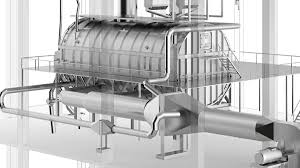
Fluid Bed Dryers The quality of products obtained from a fluid bed drying process depends on several parameters. These factors can be broadly categorized into three main groups: apparatus parameters, process parameters, and product parameters.
1. Apparatus Parameters
The structural and functional design of a fluid bed dryer significantly affects the final product quality. Some key apparatus parameters include:
- Air Distribution Plate: The positioning and design of the air distribution plate play a vital role in controlling the airflow. An optimized air distribution plate ensures uniform drying and prevents dead zones where drying may be inconsistent.
- Shape of the Equipment Body: The physical structure of the equipment, particularly the annular base design, impacts the formation and quality of the dried product. A well-designed base ensures uniform particle distribution and efficient drying.
- Nozzle Height (for Granulators and Coaters): When using a granulator or coater, the distance of the nozzle from the bed surface is critical. A higher nozzle allows for a longer travel time, ensuring even distribution of the coating or granulation material.
- Operational Pressure (Positive or Negative): The choice between operating under negative or positive pressure impacts product behavior, drying efficiency, and safety in handling volatile substances.
2. Process Parameters
Process parameters relate to the operational conditions of the drying system. They include:
- Inlet Air Temperature: Temperature is one of the most crucial factors affecting drying efficiency. Higher temperatures speed up the drying process but may not always be ideal for heat-sensitive substances. Extremely high temperatures can lead to defects like blistering, while low temperatures may result in soft spots in the dried product.
- Humidity of Inlet Air: The moisture content of the inlet air affects drying effectiveness. Low humidity facilitates faster drying, while high humidity slows down the process by reducing the rate at which moisture is removed from the particles.
- Rate of Airflow: The speed at which air flows through the bed must be carefully controlled. If the airflow is too high, particles may be ejected from the bed, while excessively low airflow can lead to inefficient drying.
3. Product Parameters
These parameters focus on the characteristics of the material being processed:
- Initial Moisture Content: The drying time required for a product is directly proportional to its initial moisture content. A higher moisture content means longer drying times, whereas a lower moisture content results in quicker processing.
- Batch Size: The amount of material being processed affects drying efficiency. Smaller batch sizes generally allow for faster drying due to better air-to-particle contact, whereas larger batches may require longer processing times.
Suitable Materials for Fluid Bed Drying: Fluid Bed Dryers
Not all materials are suitable for drying using fluid bed dryers. Some powders and granules can degrade or lose essential properties when subjected to high temperatures. Modern fluid bed dryers incorporate advanced monitoring systems to regulate critical parameters during the drying process, making them ideal for drying a variety of materials, including:
- Pharmaceuticals (tablets and granules)
- Fertilizers
- Plastics
- Chemical powders
Materials suitable for fluid bed drying typically exhibit the following characteristics:
- Contain a moderate level of moisture
- Have a uniform particle size and shape
- Are non-volatile and do not pose flammability risks
Types of Fluid Bed Dryers
Fluid bed dryers are available in different configurations based on application requirements. The two main types of fluid bed drying systems are:
1. Batch Type Vertical Fluid Bed Dryers with Granulation Features
This category includes:
- Reverse Turning Bed Type: In this design, the gas dispersion plate is rotated by 90 degrees to discharge dried material. A motor-driven mechanism is usually employed for this purpose.
- Rotating Discharge Type: This system features a discharge gate at the bottom, where dried materials exit after processing. The dispersion plate ensures even distribution of air pressure for uniform drying.
Key Characteristics:
- Offers precise control over the residence time, ensuring consistent drying.
- Ideal for applications that require uniform drying during the final stage of moisture removal.
- Best suited for crystalline and granular materials with minimal risk of particle breakage.
- Fully automated, enabling continuous feeding, drying, and discharging without manual intervention.
2. Continuous Type Horizontal Vibrating Conveyor Fluid Bed Dryer
This type of fluid bed dryer allows continuous drying of materials. The residence time depends on:
- The length of the drying chamber
- The amplitude and frequency of vibration
- The presence of partition plates and heat transfer units (which contribute 60-80% of the total heat input)
Key Features:
- Capable of drying materials with relatively high moisture content
- Can achieve piston flow behavior by using multiple partition plates
- Features perforated plates for faster discharge
- Suitable for crystalline materials, though it may cause damage to fragile particles
- Allows simultaneous heating and cooling within the same chamber
Advantages of Fluidized Bed Dryers
Fluidized bed dryers offer several advantages, making them a preferred choice for various industrial applications:
- Fast and Uniform Drying: The drying process ensures homogeneous moisture removal due to the direct contact of particles with the heated air.
- Effective for Heat-Sensitive Products: Modern designs include monitoring systems to prevent thermal degradation of delicate substances.
- Enhanced Drying Efficiency: Fluidized beds allow each particle to be individually exposed to heated air, ensuring optimal moisture removal.
- Ease of Handling: The system is relatively simple to operate, requiring minimal manual supervision once configured correctly.
- Low Maintenance Costs: The machine has fewer moving parts and experiences minimal downtime, reducing maintenance expenses.
- No Formation of Hot Spots: Since particles remain suspended during drying, there is no direct contact with heating surfaces, eliminating localized overheating.
- Available in Multiple Designs: The system is available in various shapes and sizes, catering to different industrial requirements.
- Supports Batch and Continuous Processing: The flexibility of the equipment allows both batch and continuous operations, making it adaptable to diverse production needs.
Additional benefits include:
- Reduced dust pollution during operation
- High moisture removal efficiency
- Minimal migration of soluble substances
Limitations of Fluid Bed Dryers
Despite their numerous advantages, fluid bed dryers also have certain limitations:
- Potential Product Loss: Particles in a fluidized state may escape, leading to material loss. Proper control systems can help minimize this issue.
- Electrostatic Charge Build-Up: The rapid movement of particles can generate electrostatic charges, especially with organic powders. This risk can be mitigated by implementing appropriate grounding techniques.
- Not Suitable for Sticky Materials: Materials that tend to stick together may not fluidize properly, making them unsuitable for this drying method.
- Pressure Drops: There is a possibility of pressure fluctuations, which may affect drying uniformity.
- Variability in Product Quality: Uneven fluidization can lead to inconsistencies in moisture content across different particles.
Understanding Fluidization Velocity
Fluidization is a crucial process that involves the interaction of drag force, gravity, and buoyant forces to suspend particles in a fluidized state. Fluidization velocity refers to the specific speed at which a fluidized bed processor effectively fluidizes powder particles. This velocity is a key factor in determining the efficiency of the fluidization process, as it significantly increases the surface area of the particles, allowing for improved processing, drying, or chemical reactions
Conclusion
Fluid bed dryers are highly efficient drying systems widely used in pharmaceuticals, chemicals, and food processing industries. Understanding the impact of fluidization velocity, apparatus parameters, and process settings is essential for achieving optimal drying performance. Despite some limitations, modern advancements in design and control mechanisms make fluid bed dryers a reliable and effective solution for drying a broad range of materials.