
|
Getting your Trinity Audio player ready... |
Comparing Tumble Dryers and Fluid Bed Dryers
Tumble dryers and fluid bed dryers are both essential equipment used for drying materials, but they operate on different principles and are suited to distinct types of applications. Both play a crucial role in industries ranging from pharmaceuticals to food processing, and each offers unique advantages depending on the material being processed. Below is a detailed comparison between these two types of dryers to better understand their functionalities, differences, and applications.
Tumble Dryers
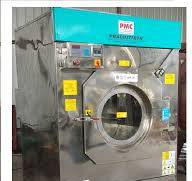
Tumble dryers are machines designed to remove excess moisture from various materials, with Softgel capsules being one of the common applications. These dryers consist of large rotating baskets or drums that move the materials within them, aiding in the drying process. The basic design of tumble dryers is simple, making them easy to operate. The central feature of a tumble dryer is its ability to circulate heat in a controlled environment, which effectively removes moisture from the material placed inside the drum.
In addition to the rotating drum, tumble dryers often incorporate heat-producing elements that generate warmth under regulated conditions. The heat helps accelerate the evaporation of moisture, thereby drying the materials efficiently. The materials being dried are usually placed on tray-like structures inside the drum. These trays are typically smooth and lack perforations, ensuring that the materials are not suspended in the air during the drying process. As a result, tumble dryers do not rely on the suspension of particles for moisture removal, unlike other types of dryers.
Tumble dryers can serve as the final step in a material’s drying process. However, in some cases, they may only be a part of a larger drying sequence, with the material undergoing additional drying steps afterward. Tumble dryers are versatile and can handle a wide range of materials, including powders, granules, and even larger items. However, they are best suited for situations where the material needs to be dried without further suspension or handling.
Fluid Bed Dryers
Fluid bed dryers operate on a completely different principle. These dryers utilize the process of fluidization to remove moisture from materials. Fluidization involves blowing hot air through a bed of solid particles, suspending them in the air. As the particles are lifted by the airflow, they become fully immersed in the hot air, which helps in the efficient transfer of heat and moisture removal. The hot air circulates around the suspended particles, ensuring that all of them are uniformly exposed to the heat, thereby allowing for quick and effective drying.
One of the key benefits of a fluid bed dryer is its ability to provide uniform heat distribution, as the particles are in constant motion. This motion helps prevent clumping and ensures that moisture is evenly removed from the material. Additionally, fluid bed dryers are often the final stage in the drying process because the fluidization technique leaves the particles adequately dried. After going through a fluid bed dryer, there is usually no need for additional drying steps.
Fluid bed dryers are particularly effective when dealing with solid particles that have a specific moisture content. The drying process requires the particles to be within an optimal moisture range for the system to function efficiently. These dryers are often used for granules, powders, and other similar materials. The drying time in a fluid bed dryer is much shorter than that of a tumble dryer, often lasting between 30 to 90 minutes, depending on the material and conditions.
Tray Drying vs. Fluid Bed Drying
Tray drying is another drying method used for various materials. It involves spreading the material on trays and placing them in an oven where hot gases or air pass over them, removing moisture through direct contact. The material does not get suspended in the air, unlike the fluid bed drying process, where particles are lifted and suspended. Instead, the particles in tray drying remain in a dense bed, resting on top of one another.
Tray drying is a relatively slower process, often taking several hours or even a full day to completely dry the material. The drying rate is dependent on the temperature of the hot gases, the airflow, and the moisture content of the material. Despite its longer drying time, tray drying is versatile and can handle materials with varying moisture contents.
In contrast, fluid bed drying is much faster. The constant movement of the particles in the hot air stream accelerates the drying process. Fluid bed dryers are more efficient for drying materials that require uniform drying conditions, as the particles are exposed to the hot air from all sides. The drying gases carry away the vaporized moisture, leaving the particles uniformly dried and free from excess moisture. The shorter drying time, typically between 30 and 90 minutes, makes fluid bed drying a preferred choice for time-sensitive applications.
Fluid Bed Granulation and Its Advantages
Fluid bed granulation is a specific process used in the pharmaceutical and chemical industries to improve the properties of solid materials. This wet granulation process involves adding a binder to dry particles, causing them to bind together and form aggregates. The primary goal of fluid bed granulation is to enhance the properties of the material, such as flowability and compressibility, while preventing the segregation of the particles.
Fluid bed granulators are essential equipment in this process, offering several benefits:
- Time and Cost Efficiency: Fluid bed granulators are designed as all-in-one systems that automate the entire granulation process. This reduces the need for additional labor, saving both time and cost.
- Ease of Operation: Fluid bed granulators are user-friendly, with many functions being automated. Operators can control the process parameters via a simple control panel, making them easy to use.
- Increased Efficiency and Output: Fluid bed granulators significantly increase granulation efficiency, leading to higher output. Heat transfer within these systems is much greater compared to other granulating machines, ensuring effective and rapid granulation.
- Prevention of Mottling: Due to the uniform granulation and drying process within a fluid bed granulator, the formation of mottled products (uneven coloration or texture) is prevented.
- Low Maintenance Costs: Fluid bed granulators are durable and require minimal maintenance. This reduces the amount of time and money spent on maintenance activities, ensuring continuous production.
- Versatility: Fluid bed granulators come in various sizes and designs, making them suitable for different production requirements. They are also capable of processing heat-sensitive materials, thanks to sensors that regulate heat levels during granulation.
Top Spray Granulation Parameters
In the top spray granulation method, which is the most commonly used granulation technique in fluid bed granulators, several key parameters influence the processing of materials. These parameters include:
- Air Handling System: This system controls the dehumidification and humidification processes, providing the necessary hot air for the fluidization of particles. It is crucial in achieving proper granulation and drying conditions.
- Product Container and Expansion Chamber: This is the chamber where the granulation of the solid particles occurs. The expansion chamber ensures that the particles are adequately suspended and mixed with the binder solution.
- Exhaust System: The exhaust system removes excess moisture from the process, preventing it from affecting the quality of the final product. It also ensures that contaminants are filtered out of the system.
Other important parameters affecting top spray granulation include the temperature of the inlet air, the volume of fluidization air, the pressure used for atomization, and the rate at which the binder is sprayed onto the particles. Each of these parameters can influence the size, friability, and uniformity of the granules formed.
Fluid Bed Granulation vs. Fluid Bed Coating
Fluid bed granulation and fluid bed coating are two distinct processes, although they both use the fluidized bed system. The primary difference between the two lies in their objectives.
Fluid bed granulation is focused on the formation of granules by binding particles together using a binder solution. The particles are suspended in hot air, and as they collide, they form aggregates that eventually turn into granules.
On the other hand, fluid bed coating involves applying a thin, uniform coating to the surface of solid particles. This coating can be made from organic or aqueous solutions, and the coating process is facilitated by the movement of particles within the fluid bed. The liquid evaporates as the particles are exposed to the hot air, leaving behind a solid coating layer on the particles.
While both processes involve suspending particles in hot air, fluid bed granulation forms new aggregates of particles, whereas fluid bed coating is concerned with applying a surface layer to the existing particles.
Fluid Bed Granulator vs. Rapid Mixer Granulator
The rapid mixer granulator and the fluid bed granulator are both used for granulation, but they operate in fundamentally different ways. A rapid mixer granulator is a high-speed device designed to mix powders and break down particles into smaller, uniform sizes. It is ideal for producing homogeneous mixtures with uniform particle size distributions. The rapid mixer granulator uses an air purge sealing system to ensure efficient mixing.
Fluid bed granulators, on the other hand, rely on fluidization to mix and granulate particles. These machines provide a more uniform and controlled environment for granulation, as the particles are suspended in the air stream, allowing for efficient mixing and granulation.
Both machines have their unique benefits and applications, with rapid mixer granulators being more suited for high-speed mixing and fluid bed granulators excelling in creating uniform granules with consistent properties.
Conclusion
Both tumble dryers and fluid bed dryers are highly effective in drying materials, but their methods and ideal applications differ significantly. Tumble dryers are better suited for materials that do not require suspension during drying, while fluid bed dryers excel in rapidly drying materials that benefit from fluidization. Similarly, fluid bed granulation and fluid bed coating are distinct processes, with the former focused on granule formation and the latter on coating. Understanding the differences between these drying and granulating methods can help industries choose the right equipment for their specific needs, optimizing both efficiency and output.