
|
Getting your Trinity Audio player ready... |
Vibro Sifter
Vibro Sifter is a highly versatile and essential piece of equipment widely used across various industries, including pharmaceuticals, food processing, chemicals, cosmetics, and research laboratories. This piece of machinery is designed to separate, grade, and scalp materials based on the particle sizes they contain, making it an indispensable tool for both industrial and laboratory environments. Its primary role is to assist in the separation of materials with different particle sizes, which can be useful for final product preparation or further processing.
Understanding Vibro Sifters
The Vibro Sifter operates on the fundamental principle of sieving, which involves separating particles according to their sizes. It utilizes a vibrating motion to pass materials through mesh screens, facilitating the sorting process. Different variants of the Vibro Sifter exist, each designed for specific applications, depending on the requirements of the industry. These machines are also referred to by various other names, including vibrating sieve, safety screener, vibrating sifter, check screen, and control sieve.
A Vibro Sifter can be used for various purposes in an industrial setting, such as:
- Scalping: Removing coarse particles from finer materials.
- Proof Sifting: Ensuring that only clean, properly sized materials move forward in the production process.
- Grading or Screening: Sorting materials into different size categories based on specific criteria.
Comparing Vibro Sifter and Vibrating Screen
Many people may wonder if a Vibro Sifter is the same as a Vibrating Screen. The answer is yes — the Vibro Sifter is often known as a vibrating screen. However, the term “vibrating screen” is sometimes more commonly used to describe equipment designed for industrial-scale material screening, while Vibro Sifters are often seen in smaller, more precise applications, such as laboratories. Both devices work on the same principle of vibration to separate particles, though the designs may vary slightly depending on the intended application.
What is a Gyratory Screen?
A gyratory screen is another type of particle separation equipment similar to the Vibro Sifter, but it moves in a circular motion rather than linear vibrations. This circular motion allows the equipment to handle delicate items with care, making it ideal for sorting fragile or sensitive materials.
Advantages of Using a Vibro Sifter
There are several notable benefits to using a Vibro Sifter in various industries:
- Low Installation Cost: Vibro sifters are relatively inexpensive to install compared to other types of separation equipment, making them accessible even to businesses with limited resources.
- Energy Efficiency: These machines consume less power during operation, which helps reduce overall operational costs.
- Flexibility: Vibro sifters can be used for both domestic and industrial applications, making them highly adaptable.
- Efficient Separation: Vibro sifters are perfect for separating various particle sizes, which is crucial for obtaining high-quality materials.
- Portability: Their lightweight design allows them to be easily moved from one location to another.
- Durability and Low Maintenance: Vibro sifters are typically built to last and require minimal maintenance.
- Efficient Particle Separation: Vibro sifters offer high-quality separation, ensuring that the correct particles are isolated for further processing.
Types of Vibro Sifters
Vibro sifters come in different forms, depending on the manufacturer and the specific needs of the industry. Some common types of Vibro Sifters include:
- Single-Layer Vibro Sifter: This type has only one screen layer, making it simple yet effective for certain applications.
- Double-Layer Vibro Sifter: With two screen layers, this type offers increased capacity and efficiency in separation.
- Triple-Layer Vibro Sifter: Three layers of screens allow for even finer separation of materials, making it suitable for high-precision applications.
- Industrial Vibro Sifter: Commonly found in food processing industries, this version is designed to handle large volumes of material and ensures high-quality separation.
- Laboratory Vibro Sifter: Used in research laboratories and pharmaceutical labs, this type is designed for smaller quantities of material, offering precise particle separation.
- L-Shaped Sieve Frame Vibro Sifter: This unique design allows for more efficient material handling and quick sieve changeover.
- Small Sieve Diameter Vibro Sifter: Ideal for separating fine particles, this machine is great for applications requiring high precision.
- Large Sieve Diameter Vibro Sifter: Best suited for handling larger particles, it is commonly used in industrial and food processing sectors.
Industries That Use Vibro Sifters
Vibro sifters are used across a wide range of industries. Some of the key industries that rely on Vibro sifters include:
- Pharmaceutical Industry: Vibro sifters are essential in the pharmaceutical industry for ensuring that raw materials and final products meet quality standards.
- Cosmetic Industry: In cosmetics, Vibro sifters are used to sort ingredients to ensure uniformity in the final product.
- Food Processing Industry: Vibro sifters help separate different food ingredients, ensuring consistency and quality.
- Agricultural Industry: Vibro sifters help with grain sorting and other agricultural processes that require precision.
- Chemical Processing: Vibro sifters are used in chemical industries to separate raw materials and finished products by particle size.
Main Parts of a Vibro Sifter
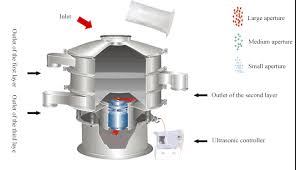
The main components of a Vibro Sifter include:
- Motor: The motor powers the machine, causing it to vibrate and create the desired particle separation effect.
- Hopper Lid: This is the top part of the Vibro Sifter that helps contain the materials during the separation process.
- Filter Screen: The screen ensures that the materials pass through only the appropriate sized openings for accurate separation.
- Wire Mesh Screen Ring: This part offers structural support to the screen, preventing it from tearing or becoming damaged during use.
- Over-sized Material Outlet: This valve releases any oversized particles that are separated during the sifting process.
- Screened Material Outlet: This outlet releases the appropriately sized materials, ensuring they are ready for the next stage of production or processing.
- Vibrating Springs: These springs allow for the free vibration of the machine, facilitating the separation process.
- Control Panel: The control panel includes buttons and settings to manage the operation of the Vibro Sifter.
The Principle Behind Vibro Sifters
Vibro sifters operate on the Gyro Principle, which is based on gyratory motion. This motion is generated by a Gyro motor beneath the machine, causing it to vibrate. The vibrating screen then facilitates the passage of particles based on their size, with smaller particles passing through the mesh while larger ones are retained.
Materials Used in Vibro Sifter Construction
Vibro sifters are constructed from a variety of materials, including:
- Stainless Steel: Known for its durability and resistance to corrosion, stainless steel is commonly used for the construction of Vibro sifters.
- Aluminum Alloy: Lightweight and strong, this material helps reduce the overall weight of the machine.
- Plastic: Lightweight plastic is used in some parts to further reduce the machine’s weight.
- Copper Wire: Copper is often used in electrical components for conductivity.
- Cast Iron: Cast iron may be used for structural parts that require strength.
Limitations of Vibro Sifters
While Vibro sifters are highly efficient, there are some limitations to consider:
- Complexity of Operation: Vibro sifters require professional handling, which can increase overall operating costs.
- Space Requirements: These machines need a certain amount of space for installation, which may pose a challenge in smaller facilities.
- Feeding Zone Issues: The feeding area can sometimes lead to lump formation, which can cause inefficiency during the separation process.
Selecting the Right Mesh Screen for Vibro Sifters
When choosing a mesh screen for your Vibro Sifter, several factors need to be considered, including:
- Mesh Material: Stainless steel mesh is common due to its durability and resistance to corrosion.
- Mesh Size: The mesh size should correspond to the desired particle size for separation.
- Mesh Tension: The screen must hold the particles firmly in place during the sieving process.
Improving Vibro Sifter Performance
To optimize the performance of a Vibro Sifter, consider the following actions:
- Continuous Material Feeding: Avoid interruptions in material flow, which can negatively impact screening efficiency.
- Maximize Screen Area: Distribute materials evenly across the screen to ensure optimal performance.
- Proper Mesh Tension: Adjust the mesh tension to allow for smooth particle flow without blockages.
- Use High-Quality Mesh Screens: Ensure that the mesh is of good quality and accurately sized for efficient particle separation.
Efficient Construction Design for Vibro Sifter
An efficient design for a Vibro Sifter should take the following factors into account:
- Ease of Cleaning: The design should allow for easy cleaning to reduce the risk of contamination.
- Compact Size: A smaller, more compact design facilitates better cleaning and maintenance.
- Material Selection: Stainless steel or carbon steel materials are often used for durability and hygiene.
- Screen Area: A larger screen area increases operating capacity and efficiency.
- Operating Frequency: Higher frequency means faster particle separation, but it should be balanced with energy consumption.
- Feed Points: A design with multiple feed points allows for better material distribution and separation.
Vibro Sifter in Pharma Industry
In the pharmaceutical industry, Vibro sifters are considered crucial for maintaining high standards of hygiene. The equipment is designed with a gap-free construction, minimizing bacterial buildup. The ability to easily clean and replace screens ensures that there is minimal risk of cross-contamination, making Vibro sifters in pharmaceutical applications the most hygienic option for separating materials.
By understanding the principles, types, and benefits of Vibro sifters, industries can choose the right equipment for their material processing needs, ensuring efficiency and quality in their operations.