
|
Getting your Trinity Audio player ready... |
Ultimate Guide to Capsule Fillers: A Comprehensive Overview
Capsule Fillers The capsule filling industry is a pivotal part of pharmaceutical and nutritional product manufacturing. Whether you’re producing capsules on a small scale for research and development (R&D), clinical trials, or large-scale commercial production, the right capsule filler machine is crucial. The diverse needs of the industry from filling micro doses to large volume capsules require machines that can meet specific demands, making capsule fillers a vital tool.
In this guide, we will explore the intricacies of capsule filling, providing you with a deep understanding of various types of capsule fillers and their applications. Whether you are new to the industry or seeking to enhance your knowledge, this guide will provide all the information you need to become an expert in capsule filling technology.
What Is a Capsule Filler?
A capsule filler is a device used to fill empty capsules with various substances such as medicine, nutrients, or supplements. Depending on the scale of production, you can choose between manual, semi-automatic, or fully automatic capsule fillers. These machines are designed to efficiently fill capsules, ensuring that each capsule contains the correct amount of active ingredients, whether for personal use, small-scale research, or large-scale production.
A capsule filler may be employed in laboratories for research purposes, where smaller quantities of capsules are needed, or in industrial settings where large volumes of capsules need to be filled quickly and accurately. The choice of machine will depend on the specific needs of the user, including the type of formulation, desired production speed, and batch size.
Key Considerations in the Capsule Filling Process
When filling empty capsules, several factors must be considered to ensure the process runs smoothly and efficiently. These factors include the type of formulation used, the size of the capsule, the fill weight, and the quality compliance of the final product.
1. Formulation Types
Capsules can be filled with a variety of substances, including granules, powders, tablets, pellets, and liquids. The choice of formulation significantly impacts the type of filler machine used and the complexity of the filling process. Some common types of formulations include:
- Powders and Granules: These are often used for oral medications and supplements. Powders can be of varying consistency, and granules are commonly used for controlled-release formulations.
- Pellets and Micro-tablets: These are often used in advanced formulations, where controlled release or sustained delivery of the active ingredient is required.
- Liquids: While capsules are typically used to contain solid formulations, liquid-filled capsules are becoming more common, particularly for oils or other non-aqueous liquids. However, the filling process for liquids requires special care to prevent leakage or breakage of the capsule.
2. Capsule Size and Fill Weight
Capsules come in various sizes, from size 000 (the largest) to size 5 (the smallest), and the size of the capsule determines how much active ingredient it can hold. The size selection is influenced by the formulation’s bulk density, the required dose, and the type of active ingredients being encapsulated.
For example, powders with a low bulk density will require a larger capsule size to hold the same dose compared to denser materials. Therefore, determining the optimal capsule size and fill weight is a critical step in the formulation process.
3. Capsule Filling Purpose
The purpose of capsule filling—whether for clinical trials, research, or commercial production—also impacts the choice of machine. Small batch clinical trials or R&D may require manual or semi-automatic machines, which offer flexibility and are more cost-effective for lower volumes. On the other hand, commercial production, where speed and efficiency are critical, will require fully automated systems that can fill large quantities of capsules quickly and accurately.
4. Quality Compliance
Maintaining high-quality standards and ensuring compliance with regulations is essential in the capsule filling process. The pharmaceutical and nutritional industries are highly regulated, and companies must adhere to strict guidelines to ensure that their products are safe, effective, and traceable.
Some of the key quality standards to consider include:
- Bovine Spongiform Encephalopathy (BSE): Ensuring that materials used in capsule production do not contain bovine-derived ingredients that may pose health risks.
- Food and Drug Administration (FDA): Compliance with FDA regulations regarding the safety, efficacy, and labeling of products.
- cGMP (Current Good Manufacturing Practices): Ensures that manufacturing processes adhere to quality control standards to produce consistent and high-quality products.
- ISO Standards: International standards for product quality and safety.
- Pharmacopoeias: These include various pharmacopeias such as the United States Pharmacopoeia (USP), European Pharmacopoeia (PhEur), and Japanese Pharmacopoeia, which set quality standards for medicines and capsules.
Adhering to these regulations ensures that capsules are safe for consumption and contain the correct dosage.
Types of Capsule Fillers
Capsule fillers come in different formats depending on the scale of production. The three primary types of capsule filling machines are:
- Manual Capsule Fillers
- Semi-Automatic Capsule Fillers
- Fully Automatic Capsule Fillers
Let’s dive deeper into each type.
Manual Capsule Filler Machines
A manual capsule filler is typically used for small-scale production or research purposes. These machines are simple, cost-effective, and ideal for filling relatively small quantities of capsules.
Key Components of a Manual Capsule Filler
A manual capsule filling machine typically consists of several key components:
- Loading Tray: Where empty capsules are placed before filling.
- Capsule Holes: These holes hold the capsules in an upright position for the filling process.
- Locking Lever: This mechanism separates the capsule body from the cap during the filling process.
- Powder Tray: Where the filling material (usually powder) is placed.
- Filler: The main component used to fill the capsules with the active ingredient.
- Guiding Nozzles: These direct the filling material into the capsule.
- Tamper: Compresses the filling material into the capsule to ensure it fits properly.
- Turning Knobs: Adjust the tightness and movement of the machine.
Advantages of Manual Capsule Fillers
- Affordable Initial Cost: Manual machines are cost-effective for small-scale production or research labs.
- Compact Size: They are small and easy to move around.
- Simple to Operate: No specialized training is needed to operate these machines.
- Easy to Clean: Manual fillers can be easily disassembled for cleaning and maintenance.
Disadvantages of Manual Capsule Fillers
- Limited Speed and Efficiency: Manual fillers can only fill a small number of capsules at a time, making them unsuitable for large-scale production.
- Labor-Intensive: They require more manual intervention, which can be time-consuming.
- Limited Precision: It can be challenging to achieve consistent fill weights without the aid of automation.
Semi-Automatic Capsule Fillers
Semi-automatic capsule filling machines are ideal for medium-scale production. These machines combine some level of automation with manual intervention, offering a balance between speed and cost.
Advantages of Semi-Automatic Capsule Fillers
- Higher Speed: These machines can fill capsules more quickly than manual fillers.
- Flexibility: They are suitable for small to medium-sized batches and can handle a variety of formulations.
- Cost-Effective: More affordable than fully automatic machines, making them an excellent choice for growing businesses.
Disadvantages of Semi-Automatic Capsule Fillers
- Limited Automation: Some steps in the filling process still require manual effort, which can slow down production.
- More Complex than Manual Fillers: Operators need some training to handle semi-automatic machines effectively.
Fully Automatic Capsule Fillers
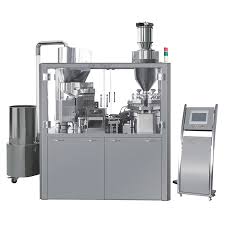
Fully automatic capsule filling machines are used for large-scale production and are capable of filling thousands of capsules per hour. These machines are highly efficient and precise, making them ideal for commercial pharmaceutical manufacturing.
Advantages of Fully Automatic Capsule Fillers
- High-Speed Production: Fully automated machines can fill large volumes of capsules in a short period.
- Accuracy and Precision: These machines ensure that each capsule is filled with the correct amount of active ingredient.
- Reduced Labor Costs: Automation reduces the need for manual labor, lowering production costs in the long term.
Disadvantages of Fully Automatic Capsule Fillers
- High Initial Cost: These machines require a significant upfront investment.
- Complexity: Operating and maintaining these machines can require specialized training and knowledge.
Capsule Filling Process: Step-by-Step Guide
The process of filling capsules involves several steps, whether you are using a manual, semi-automatic, or fully automatic machine. Below is a simplified overview of how the capsule filling process works.
Step 1: Prepare Ingredients
Before starting, gather all the necessary ingredients—empty capsules, the active ingredient (typically powder), and any other excipients required for the formulation.
Step 2: Place Capsules on the Tray
Empty capsules are placed into the machine’s capsule holes. The capsules are held in position for the next steps.
Step 3: Separate the Capsule Bodies and Caps
The locking mechanism separates the capsule bodies from the caps. This allows the filling material to be placed inside the body of the capsule.
Step 4: Fill the Capsules
The filling material (usually powder) is transferred into the capsule bodies. For manual machines, this is done manually, while semi-automatic and automatic machines will dispense the powder automatically.
Step 5: Compress the Filling Material
After filling, the tamper compresses the material into the capsule body to ensure proper fitting and to make space for additional powder if needed.
Step 6: Reassemble the Capsule
The cap is placed back onto the body of the capsule, and the two parts are locked into place.
Step 7: Quality Control and Packaging
The filled capsules are inspected for quality control, ensuring they meet the required size and weight. Once approved, they are packaged and prepared for storage or shipment.
Capsule Filler Quality Verification and Compliance
Ensuring the quality of capsules is essential to meet regulatory standards. This includes verifying the fill weight, size, and integrity of the capsules. Quality control measures must be in place to ensure that every capsule is filled correctly, with no discrepancies in dosage.
Conclusion
Capsule filling is a crucial process in the production of pharmaceuticals, dietary supplements, and other health-related products. Choosing the right capsule filling machine—whether manual, semi-automatic, or fully automatic—depends on factors such as scale, formulation type, and desired production speed. Regardless of the scale of production, adhering to quality standards is essential to ensure the safety and efficacy of the final product. Understanding these various elements will allow you to make informed decisions and navigate the capsule filling industry effectively.
By carefully considering the factors outlined in this guide, you will be well on your way to mastering the art and science of capsule filling. Whether you are a researcher, manufacturer, or entrepreneur, this knowledge will help you optimize the filling process and produce high-quality products.