
|
Getting your Trinity Audio player ready... |
Fluid-Bed Processors: A Comprehensive Guide
Introduction to Fluid-Bed Processors
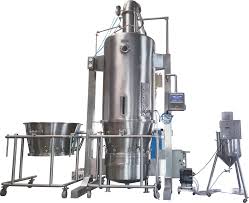
Fluid-bed processors are versatile pieces of equipment used for mixing, granulation, drying, or coating in industries such as pharmaceuticals, chemicals, food processing, and more. These machines include a variety of specialized models such as fluid bed coaters, dryers, granulators, and multifunctional granulator-coater combinations. They play a crucial role in optimizing product quality and enhancing the efficiency of material processing.
Understanding the Fluid Bed Process
The fluid bed process involves the fluidization of particles to improve properties such as compressibility and flowability. This is achieved using a fluid bed machine, which creates an upward airflow to suspend and agitate the particles. The process ensures even distribution of moisture, heat, and binder solutions, leading to uniform granulation or drying.
What is Fluid Bed Granulation?
Fluid bed granulation is a key technique in material processing that transforms fine powders into granules by binding smaller particles together. This is done by spraying a binder liquid onto the particles, which then aggregate into larger granules. This method improves compressibility and flowability while preventing the segregation of different components within a mixture. The process is widely used in industries where uniform particle size and consistency are essential.
1. Understanding Fluid Bed Equipment
Fluid bed equipment consists of machines designed to remove moisture from pharmaceutical granules or powders, aiding in granulation and coating processes. This equipment relies on the fluidization principle, where air is used to suspend and agitate particles, ensuring efficient drying and granulation. By controlling airflow, temperature, and binder spray rates, fluid bed equipment enables high-quality production in various industries.
Applications of Fluid Bed Processors
Fluid bed processors serve multiple functions, including:
- Mixing particles to achieve uniform distribution.
- Coating particulate material to enhance stability and effectiveness.
- Layering drug particles in pharmaceutical applications.
- Transforming powders into granules for improved handling and tablet formulation.
- Moisture removal from wet particles or granules.
- Enhancing flowability and dispersibility of processed materials.
- Increasing stability by making granules moisture-resistant.
- Pelletizing and spheronizing particles for specific industrial applications.
Industries Utilizing Fluid Bed Processors
Fluid bed processors are widely used across various industries, including:
- Pharmaceutical Industry: Manufacturing tablets and capsules with uniform composition.
- Food Processing: Improving flowability and dispersibility of food ingredients.
- Chemical Industry: Enhancing storage stability and ease of handling.
- Cosmetic Industry: Creating beauty and skincare products with precise formulations.
- Petrochemical Industry: Processing materials for industrial applications.
Exploring Fluidization Technology
Fluidization technology is a method where granular materials transition from a solid-like state to a fluid-like state when subjected to upward-moving air or liquid at high velocity. This process improves mixing, heat transfer, and reaction efficiency in various industrial applications.
Historical Development of Fluidization Technology
Fluidization technology was first introduced in 1922 by German scientist Fritz Winkler. He developed its first industrial application for coal gasification, laying the foundation for modern fluidized bed processes used today in pharmaceuticals, chemicals, and food industries.
Role of Fluidized Beds in Pharmaceutical Processing
A fluidized bed is a system in which solid particles are suspended by a stream of air, allowing for processes such as granulation, coating, and drying. This technique ensures uniformity in pharmaceutical products, improving their stability and performance.
Types of Fluidized Beds
There are several types of fluidized beds, each with unique flow behaviors and applications:
- Bubbling (Stationary) Fluidized Bed
- Utilizes a low-velocity airflow to fluidize stationary solid particles.
- Circulating Fluidized Bed (CFB)
- Operates at higher pressures to fluidize more particles.
- Uses an external loop to recirculate entrained particles back into the reactor.
- Vibratory Fluidized Bed
- Similar to a stationary fluidized bed but incorporates vibrations to enhance particle movement.
- Flash or Transport Reactor
- Functions at velocities exceeding those of circulating fluidized beds.
- Reduces slip velocity between solids and gas, enhancing efficiency.
- Annular Fluidized Bed (AFB)
- Features a central nozzle that introduces high-velocity gas, increasing the speed of material mixing.
- Mechanically Fluidized Reactor (MFR)
- Uses a mechanical stirrer instead of fluidizing gas to mobilize particles.
- Narrow Fluidized Bed (NFB)
- Has a strong confinement effect due to the low ratio between grain diameter and tube diameter.
Understanding Minimum Fluidization
Minimum fluidization occurs when the velocity of the upward-moving gas equals the gravitational pull on the particles. This is the threshold at which a bed of particles becomes fully fluidized. Determining the minimum fluidization velocity is essential for designing efficient fluidized bed systems.
Fluid Bed Processors in Wet Granulation
Yes, fluidized bed processors are extensively used in wet granulation. The process involves suspending materials within the fluid bed, applying a binder solution, and allowing particles to agglomerate. Once granulation is complete, the product undergoes drying to eliminate excess moisture, resulting in uniform granules suitable for tablet or capsule formulation.
Advantages of Fluid Bed Processing
Fluid bed processing offers numerous benefits, including:
- Faster Processing: Ensures rapid and uniform mixing, drying, and granulation.
- Versatility: Handles various materials, including heat-sensitive substances.
- Efficiency: Reduces process time and resource consumption.
- Ease of Use: Requires minimal manual intervention.
- Wide Range of Sizes: Available in different capacities to suit industrial needs.
- Consistent Product Quality: Produces uniform granules with minimal variation.
- Minimal Downtime: Reduces maintenance requirements due to smooth operation.
Enhancing Efficiency in Fluid Bed Processing
Optimizing the fluid bed process requires a thorough understanding of the technology and process variables. Efficiency can be improved by focusing on the following aspects:
1. Optimizing the Fluidization Principle
Fluid bed dryers rely on fluidization to function effectively. By controlling airflow, temperature, and binder spray rates, operators can achieve optimal drying and granulation.
Indicators of efficiency include:
- Faster drying rates
- Improved thermal efficiency
- Precise control over airflow and temperature
- Reduced material handling costs
- Higher return on investment (ROI)
2. Controlling Process Variables
Maintaining control over process parameters ensures consistent product quality. Key variables include:
- Apparatus parameters: Air distribution plate, nozzle height, granulator bowl size, and pressure settings.
- Process variables: Inlet airflow, bed load, humidity, and temperature.
- Product parameters: Binder type, concentration, and solvent characteristics.
By monitoring and adjusting these parameters, manufacturers can improve granulation efficiency and final product quality.
3. Adopting Advanced Fluid Bed Designs
Modern fluid bed processors incorporate design enhancements that optimize efficiency. Options include:
- Tangential spray systems for improved granulation.
- Top spray systems for uniform coating.
- Bottom spray systems for efficient layering.
By selecting the right design, manufacturers can tailor fluid bed processing to meet specific material requirements, enhancing efficiency and productivity.
Conclusion
Fluid-bed processors play a critical role in various industries, providing an efficient method for granulation, drying, and coating. By understanding the principles of fluidization technology and optimizing process variables, businesses can maximize efficiency and product quality. As advancements continue in fluid bed processing, manufacturers will benefit from improved productivity, reduced costs, and enhanced material performance across numerous applications.