
|
Getting your Trinity Audio player ready... |
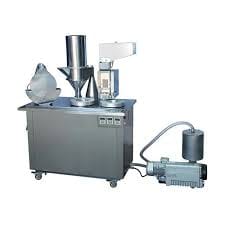
Semi-Automatic Capsule Filling Machine
semi-automatic capsule filling machine is a device that integrates both manual and automatic processes for filling empty capsules with various types of materials such as powders, pellets, or granules. This type of machine offers a combination of human intervention and mechanical assistance to increase efficiency and output while maintaining precise control over the filling process.
Benefits of Semi-Automatic Capsule Filling Machines
There are several advantages to using a semi-automatic capsule filling machine, especially when compared to manual filling methods. Some of the key benefits include:
- Versatility in Fillers: One of the main advantages of a semi-automatic capsule filling machine is its ability to fill a variety of materials such as powders, pellets, and granules. This allows for greater flexibility and use across different product lines.
- Increased Efficiency: While the machine does not offer the full automation of its fully automatic counterparts, it significantly increases production speed compared to manual methods, thanks to its partially automated functions.
- Scalable Production: A semi-automatic machine is capable of handling larger-scale production compared to manual capsule filling machines, making it an excellent choice for growing businesses or those with moderate production requirements.
- Lower Initial Investment: In comparison to fully automatic machines, semi-automatic capsule filling machines generally have a lower initial cost, making them more accessible for small and medium-sized businesses looking to scale production without breaking the bank.
- Reduced Labor Costs: By replacing much of the manual labor required in the capsule filling process, the semi-automatic machine allows businesses to operate with fewer employees, leading to a reduction in labor costs.
- Improved Accuracy: Semi-automatic capsule fillers typically provide more accurate dosing than manual methods. The automated elements help ensure that each capsule is filled with a precise amount of the material.
- Quality Compliance: These machines are designed to meet industry standards for manufacturing quality, ensuring that they are safe to use and that the final products meet regulatory requirements.
- Capsule Polishing: After the filling process, the machine automatically polishes the capsules, enhancing their appearance and ensuring a smooth finish, which can be critical for consumer appeal.
- Quieter Operation: Unlike some fully automated machines, semi-automatic capsule fillers are generally quieter, which contributes to a more comfortable and less disruptive working environment.
Disadvantages of Semi-Automatic Capsule Filling Machines
Despite the numerous benefits, there are also several disadvantages to using a semi-automatic capsule filling machine:
- Higher Personnel Requirements: Since the machine is not fully automated, it still requires human operators to oversee the process, load materials, and perform manual tasks such as removing and replacing caps, which increases labor costs compared to fully automatic systems.
- Higher Cost than Manual Filling: Although the initial investment is lower than that of fully automatic machines, semi-automatic machines are still more expensive than manual methods, making them less suitable for businesses with very small production needs.
- Complex Maintenance: The machine’s design may make it more difficult to disassemble certain parts for routine maintenance or cleaning, which could require specialized knowledge or technician support.
- Larger Size and Weight: Semi-automatic machines tend to be larger and heavier than manual fillers, which may make them less portable or harder to integrate into limited space environments.
- Integration Challenges: Because the machine is only semi-automated, it may be difficult to integrate it with other automated equipment, which could create challenges if you’re looking to streamline the entire production line.
- Limited Production Capacity: The involvement of manual processes means that the production rate is not as high as with fully automatic machines. Human error or delays can also slow down the production process.
- Automatic Safety Features: While semi-automatic machines have sensors and automatic controls to prevent malfunctions, they do not offer the level of safety and error prevention that a fully automated machine would provide.
Parts of a Semi-Automatic Capsule Filling Machine
A semi-automatic capsule filling machine consists of various components, each serving a specific function in the overall filling process:
- PLC Control System: This is the system through which operators input the necessary filling parameters, such as speed, dosage, and other settings. The PLC (Programmable Logic Controller) manages the automated functions of the machine.
- Filling Auger: This component controls the speed at which the machine fills the capsules with the chosen material, such as powder or pellets. The auger helps ensure uniform and consistent filling.
- Powder Hopper: The hopper is where the filling material, such as powder or granules, is stored. It is designed to make it easy to load and unload the material for the filling process.
- Loading System: This automated system moves the empty capsules and the filler material into the correct position for the filling operation.
- Caps and Body Tray: The capsule tray is divided into two parts, one holding the bodies and the other the caps of the empty capsules. The machine uses this tray to separate the caps from the bodies and position them for filling.
- Pneumatic System: The pneumatic system uses compressed air to push the filler material into the empty capsules. This ensures precise and consistent filling.
- Filling Table: The filling table holds the empty capsules in place during the filling process. The speed of the table can be adjusted to achieve more accurate dosing.
- Electrical Unit: This component powers the entire machine and its various systems, ensuring that the machine runs smoothly.
- Dosing Disk: The dosing disk automatically adjusts the amount of filler material dispensed into each capsule, ensuring precise and consistent dosing.
- Transport System: This system, typically consisting of conveyor belts and guiding rails, ensures that the capsules are moved smoothly and accurately through the various stages of the filling process.
- Capsule Opener and Closure System: This system helps open and close the capsules more efficiently and accurately, which speeds up the process.
Working Principle of Semi-Automatic Capsule Filling Machine
The operation of a semi-automatic capsule filling machine involves several key steps:
- Loading the Raw Materials: Begin by checking the machine to ensure it is in good working condition. Then, load the empty capsules and the filler material into their respective hoppers. Power on the machine, and the PLC control system will allow the machine to begin its operations.
- Removing the Caps from the Bodies: As the empty capsules are fed through the system, the machine will align them and separate the caps from the bodies. The caps will be placed in a separate tray, and the bodies will move to the next step.
- Loading and Filling the Capsules: With the bodies in place, the machine will automatically begin the filling process. The filling auger will dispense the material into the capsule bodies. The dosing disk controls the amount of material dispensed, ensuring consistency and accuracy.
- Replacing the Caps: Once the capsules are filled, the caps tray is brought back into place. The caps are then placed back onto the filled bodies, completing the capsule. The full capsules are then moved to the compression zone, where they are sealed together.
- Final Processing: After the capsules are sealed, they are released from the trays and undergo further processing, such as polishing, packaging, and storage.