
|
Getting your Trinity Audio player ready... |
Understanding the Bloom Viscosity Tester: Functions, Importance, and Applications
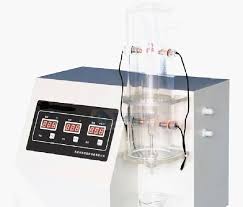
Bloom viscosity tester is a specialized device designed to measure the viscosity of gelatin. It is a crucial instrument in gelatin processing, particularly in the production of soft gelatin capsules. By using this tester, manufacturers can ensure that gelatin meets the required consistency and quality for pharmaceutical and food applications.
The Significance of Measuring Viscosity
Viscosity measurement is an essential quality control process. Understanding the viscosity of a product provides insights into how it will behave in real-world applications. Consistency in viscosity ensures uniform product quality, helps manufacturers predict the flow rate of gelatin, and enhances efficiency in the production process. Additionally, viscosity measurement plays a fundamental role in optimizing gelatin formulation, ensuring it meets required industry standards and consumer expectations.
Key Components of a Bloom Viscosity Tester
A Bloom viscosity tester consists of several integrated components that work together to ensure precise measurements. These include:
- Sample container: Holds the gelatin solution during testing.
- Spindle guard leg: Protects the spindle during operation.
- LCD touch display: Shows test parameters and results.
- Elevating knob: Adjusts the height of the tester.
- Lifting pole: Supports height adjustments.
- Height adjustment knob: Fine-tunes the position of the sample container.
- Front horizontal bubble: Ensures level positioning.
- Base: Provides stability to the entire structure.
How a Bloom Viscosity Tester Operates
The process of measuring viscosity using a Bloom viscosity tester involves several steps:
- Powering On the Device: The tester is switched on and prepared for testing.
- Placing the Gelatin Solution: The sample container is filled with a gelatin solution prepared according to standard procedures.
- Measurement Factors: The viscosity depends on bloom value, concentration, and temperature of the solution.
- Testing Procedure: A pipette is used to measure the efflux time of 100 ml of gelatin solution.
- Data Collection: The tester features an MPU (Microprocessor Unit) that controls all operations and displays results on an LED screen.
- Automation Features: The device includes automatic testing, auto-timer, and an alarm system.
- Data Storage: The tester saves each test result for future analysis.
Choosing Between Mineral Oil and Silicone Standards
Silicone standards are generally preferred in a Bloom viscosity tester because they are less sensitive to temperature variations. This ensures more stable and reliable test results compared to mineral oil standards.
The Importance of Appliance Standards
Appliance standards ensure the efficiency and reliability of a Bloom viscosity tester. Compliance with these standards guarantees that the instrument meets quality expectations, allowing manufacturers to access global markets. Some notable standards include:
- QB/T1997-94: Photographic gelatin standard.
- QB/T1995-94: Industrial gelatin standard.
- QB/T1996-94: Bone gelatin standard.
- QB2354-98: Medical gelatin standard.
- American Codex/No.22/VSPXX: Applicable to the U.S. market.
- GB6783-94: Governs food additive gelatin obtained via hydrolysis.
Comparing a Bloom Viscosity Tester to a Rheometer
While both devices measure viscosity, they serve different purposes:
- Bloom Viscosity Tester: Specifically designed for measuring the viscosity of gelatin.
- Rheometer: Measures non-Newtonian fluids, including gelatin, honey, melted butter, and starch suspensions.
Calibration of a Bloom Viscosity Tester
To ensure accurate readings, calibration of the tester is essential. The process involves:
- Preparing the tester for use.
- Selecting the appropriate calibration standard (e.g., 50, 500, 1000, or 5000 cps).
- Adjusting the spindle settings via the display panel.
- Selecting the required speed (RPM) using the control panel.
- Attaching the spindle to the lower shaft.
- Ensuring the gelatin sample is at the correct immersion level.
- Running the test and recording the stabilized reading.
- Cleaning the device after use and applying a calibration label.
Pricing of Bloom Viscosity Testers
The cost of a Bloom viscosity tester varies widely, typically ranging from $620 to $3,900. Pricing depends on features, accuracy levels, and automation capabilities.
Quality Standards for Bloom Viscosity Testers
For safety and accuracy, Bloom viscosity testers must adhere to strict quality standards such as:
- cGMP (Current Good Manufacturing Practices)
- CE (Conformité Européenne)
- RoHS (Restriction of Hazardous Substances Directive)
- CCC (China Compulsory Certificate)
Benefits of Using a Bloom Viscosity Tester
Some key advantages of using this device include:
- Ensures Quality Control: Helps industries determine gelatin behavior before reaching consumers.
- Cost Efficiency: Reduces operational costs by preventing wastage.
- Safety: Provides a safe and controlled testing environment.
- Versatility: Measures viscosity across different samples.
- Easy Data Analysis: Can be connected to a computer for detailed analysis.
- User-Friendly: Digital display ensures ease of use.
- Design Flexibility: Available in different sizes and configurations.
Pharmaceutical Applications of a Bloom Viscosity Tester
The device plays a significant role in pharmaceutical processes, including:
- Testing biological fluids in diagnostic labs.
- Assessing gel stability and bonding efficiency.
- Product benchmarking for industrial applications.
- Evaluating dispersion stability in pharmaceutical formulations.
- Determining shelf life and quality consistency.
- Manufacturing implantable drug-delivery systems.
Features of a Bloom Viscosity Tester
- Durable Construction: Made from high-quality materials.
- Automated Calculations: Uses capillary tubes and precise transducers.
- Touchscreen LED Display: Provides an intuitive interface.
- Low Noise & Pollution: Designed for minimal disruption.
- Temperature Accuracy: Ensures consistent test conditions.
- Auto-Test & Alarm Features: Enhances user convenience.
Types of Viscosity Measurements
Viscosity is classified into two types:
- Dynamic Viscosity: Measures resistance when an external force is applied.
- Kinematic Viscosity: Measures resistance under the influence of gravity alone.
Common Viscometers for Shear Viscosity Measurement
Some widely used viscometers include:
- Falling-ball viscometer
- Vibrational viscometer
- Standard laboratory viscometer
- Bubble viscometer
- Oscillating-piston viscometer
- Rotational viscometer
Factors Affecting Viscosity
Several factors influence viscosity, including:
- Temperature: Higher temperatures decrease viscosity.
- Concentration: Increased concentration results in higher viscosity.
- Particle Size: Larger particles increase viscosity.
- Attractive Forces: Stronger intermolecular forces lead to higher viscosity.
Viscosity Testing Methods
- Glass Capillary Test: Measures efflux time in a U-shaped glass tube.
- Falling Ball Test: Observes the time a ball takes to move through the fluid.
- Rotational Viscometer Test: Uses a spindle to measure resistance in the fluid.
Operating Principle of a Bloom Viscosity Tester
This device works on the principle of rotational viscometry, where a rotating spindle measures resistance to determine viscosity.
Maintaining a Bloom Viscosity Tester
To ensure longevity:
- Regularly clean the device.
- Replace faulty parts with genuine components.
- Store in a dry, contamination-free environment.
Units for Measuring Viscosity
The standard SI unit for dynamic viscosity is Newton-second per square meter (N·s/m²).
What Causes Viscosity?
Viscosity arises from intermolecular friction, which results from attractive forces between particles in a fluid.
Conclusion
A Bloom viscosity tester is an essential instrument in pharmaceutical and food industries. By accurately measuring gelatin viscosity, it ensures quality control, product consistency, and efficient production processes. Investing in a reliable Bloom viscosity tester is crucial for manufacturers aiming to produce high-quality gelatin-based products.