
|
Getting your Trinity Audio player ready... |
Pharmacy Calculations Dilutions
INTRODUCTION Pharmacy Calculations Dilutions
Pharmacy Calculations Dilutions : Dilutions play a significant role in pharmacy calculations, as they influence the concentration of medicines. When diluting a medication, the concentration of the drug is altered. It’s essential for pharmacy students to understand the effects of dilution and how to compute the concentrations after dilution occurs.
This section covers examples across seven topics:
- Basic dilutions
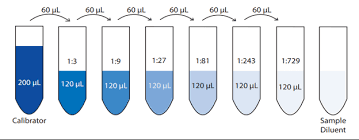
- Serial dilutions
- Dilutions for concentrated waters
- Triturations
- Powder dilutions
- Multiple dilutions
- Mixed concentrations
Although this overview is not exhaustive, it offers a solid foundation to build further knowledge on this critical area of pharmaceutical calculations.
BASIC DILUTIONS
When diluting a medicine, the total amount of active ingredients remains constant, but its concentration changes.
For instance, if a solution has 100mg of an active ingredient in 200mL of solvent and another 200mL of solvent is added, the concentration decreases. Adding more solvent spreads the active ingredient over a larger volume, resulting in a lower concentration. This is important, as giving the same volume to a patient post-dilution means they receive less of the active ingredient, which can affect the clinical outcome. Understanding dilution calculations is therefore crucial.
EXAMPLE 1
Medicine X contains 2g of an active ingredient in 500g of product. If 250g of solvent is added, calculate the concentration of the new mixture as a percentage strength, ratio strength, and amount strength (in mg/g). The active ingredient remains 2g, but the total product now weighs 750g.
Using simple multiplication or proportional sets, we find:
- p = 0.27
- r = 375
- a = 0.0027
Converting to mg/g, we get:
- 0.0027g = 2.7mg
The final answer is:
- 0.27% w/w
- 1 in 375 w/w
- 2.7mg/g
EXAMPLE 2
If 100mL of a 1 in 50 w/v solution is diluted to 1000mL, determine the concentration of the diluted product in terms of percentage strength, ratio strength, and amount strength (mg/mL).
Since 1 in 50 means 1g in 50mL, there’s 2g in 100mL. After dilution, the total volume is 1000mL, and the active ingredient remains the same (2g). Setting up proportional sets:
- p = 0.2
- r = 500
- a = 0.002
Converting mg to g, we get:
- a = 2mg
Answer:
- 0.2% w/v
- 1 in 500 w/v
- 2mg/mL
SERIAL DILUTIONS
Stock solutions are concentrated solutions used to prepare medicines through dilution. Maintaining stock solutions allows pharmacies to store less product. Let’s look at some examples.
EXAMPLE 3
To prepare 5L of a 1 in 2000 v/v solution from a 1 in 400 v/v solution, what volume of the stock solution is needed?
Let y be the volume of the 1 in 400 solution required. The amount of ingredient is the same in both cases. Set up proportional sets:
- For 1 in 400 v/v:
- Ingredient (mL) = 1, x
- Product (mL) = 400, y
- For 5L of 1 in 2000 v/v:
- Ingredient (mL) = 1, x
- Product (mL) = 2000, 5000
From this, we determine that y = 1000mL.
Answer: 1000mL of the 1 in 400 solution is needed to produce 5L of a 1 in 2000 solution.
EXAMPLE 4
How much 40% v/v solution is needed to make 500mL of a 5% v/v solution?
Let y be the required volume of the 40% v/v solution. Set up proportional sets:
- For 40% v/v:
- Ingredient (mL) = 40, x
- Product (mL) = 100, y
- For 5% v/v (500mL):
- Ingredient (mL) = 5, x
- Product (mL) = 100, 500
We find y = 62.5mL.
Answer: 62.5mL of the 40% v/v solution is required to produce 500mL of 5% v/v solution.
EXAMPLE 5
To dilute 250mL of a 25% w/v solution to a 10% w/v solution, what is the final volume?
Calculate the amount of ingredient in the 25% solution (250mL). Using proportional sets:
- From 250mL of a 25% w/v solution:
- Ingredient (g) = 25, x
- Product (mL) = 100, 250
For a 10% w/v solution:
- Ingredient (g) = 10, 62.5
- Product (mL) = 100, y
We find y = 625mL.
Answer: 250mL of a 25% w/v solution must be diluted to 625mL to produce a 10% w/v solution.
CONCENTRATED WATERS
Concentrated waters (like rose, peppermint, and chloroform waters) are used to prepare single-strength solutions. For example, chloroform water concentrate is diluted in a 1:40 ratio. Let’s calculate different volumes for producing single-strength chloroform water.
Given chloroform water concentrate is 1 part in 40, use proportional sets for various volumes (50mL, 100mL, etc.).
- a = 1.25
- b = 2.5
- c = 5
- d = 7.5
- e = 12.5
For double-strength chloroform water, take twice the volume of concentrate.
TRITURATIONS
Triturations are useful when weighing small amounts of less than 100mg. Here’s an example of how to use triturations to prepare a required concentration.
EXAMPLE 6
How would you prepare 100mL of a preparation containing 500 micrograms of hyoscine hydrobromide?
Let y be the number of milligrams of hyoscine in 100mL. We find that 10mg is needed. Use a trituration technique to prepare the solution.
Answer: The required amount is 1,000mL with chloroform water to reach the necessary concentration.
POWDER CALCULATIONS
The Pharmaceutical Codex specifies that powders must be at least 120mg. If the drug is less than 120mg, an inert powder must be added.
EXAMPLE 7
To prepare 5 powders each containing 100mg of paracetamol, calculate the amount of diluent needed.
Answer: We need 500mg of paracetamol and 100mg of diluent, making up 600mg in total.
EXAMPLE 8
Prepare 7 powders, each containing 0.37mg of drug.
Answer: You’ll need to make enough for 270 powders by diluting 100mg of drug with 32,336mg of diluent.
MULTIPLE DILUTIONS
In multiple dilutions, we calculate the ingredient amounts based on final concentration and dilution factors.
EXAMPLE 9
What weight of ingredient is needed to produce 1,000mL of a solution that, when diluted, gives a 0.25% w/v solution?
Answer: The required weight is 50g.
EXAMPLE 10
For a solution of substance X, how much is needed to produce 500mL of a 1 in 2,000,000 solution after dilution?
Answer: You need 40g of substance X.
EXAMPLE 11
How much of a 1 in 80 w/v solution is required to make 500mL of a 0.02% solution?
Answer: 8mL of the 1 in 80 solution is needed.
MIXING CONCENTRATIONS
When combining solutions of different strengths, the final concentration must be calculated.
EXAMPLE 12
Mix 200mL of 40% v/v solution with 300mL of 70% v/v solution. What is the final concentration?
Answer: The final concentration is 58% v/v.
EXAMPLE 13
Mix a 100mg/5mL solution and a 25mg/5mL solution to make a 75mg/5mL solution.
Answer: You need a 2:1 ratio of the two solutions.
EXAMPLE 14
Mix 90% v/v and 50% v/v ethanol solutions to make a 70% v/v mixture.
Answer: The ratio is 1:1.
| Section | Example | Description | Formula/Proportions | Answer |
| Basic Dilutions | Example 1 | Medicine X contains 2g of solid in 500g of product, diluted by 250g. | p = 0.27, r = 375, a = 0.0027, 0.0027g = 2.7mg | 0.27% w/w, 1:375 w/w, 2.7 mg/g |
| Example 2 | Dilute 100mL of a 1:50 solution to 1000mL. | p = 0.2, r = 500, a = 0.002, 2mg/mL | 0.2% w/v, 1:500 w/v, 2mg/mL | |
| Serial Dilutions | Example 3 | What volume of a 1:400 solution is needed for 5L of a 1:2000 solution? | x = 2.5, y = 1000 | 1,000mL of 1:400 for 5L of 1:2000 |
| Example 4 | What volume of 40% v/v is needed to make 500mL of a 5% v/v solution? | x = 2.5, y = 62.5 | 62.5mL of 40% v/v | |
| Example 5 | Dilute 250mL of 25% w/v to a 10% solution. | x = 62.5g, y = 625mL | 625mL of 10% w/v | |
| Concentrated Waters | Example 6 | Dilute chloroform concentrate to single strength for various volumes. | Proportions: 1mL to 40mL | Various concentrations (1.25mL, 2.5mL, 5mL, etc.) |
| Triturations | Example 7 | Prepare 5 powders each containing 100mg of paracetamol. | Proportions: 1:5, y = 20mg of diluent | 500mg paracetamol + 100mg diluent |
| Example 8 | Prepare 7 powders containing 0.37mg of drug. | Proportions: 1:7, 120mg total | 270 powders, 100mg drug + 32,336mg diluent | |
| Powder Calculations | Example 9 | Weight of ingredient to produce 1,000mL for dilution to 50mL | x = 0.125g, z = 50g | 50g of ingredient for 1,000mL |
| Example 10 | Weight of substance X for dilution from 25mL to 4000L. | z = 40g | 40g of substance X for 500mL | |
| Example 11 | How much of 1:80 w/v solution needed for 500mL of 0.02% w/v? | x = 0.1g, y = 8mL | 8mL of 1:80 w/v | |
| Mixing Concentrations | Example 12 | Mixing 200mL of 40% v/v and 300mL of 70% v/v solution. | Ingredient (mL) 40:x, Ingredient 70:y, p = 58% | 58% v/v final concentration |
| Example 13 | Mix two suspensions (100mg/5mL & 25mg/5mL) to get 75mg/5mL. | V1/V2 = 2/1 | 2 parts 100mg/5mL & 1 part 25mg/5mL | |
| Example 14 | Mixing 90% v/v and 50% v/v ethanol to get 70% v/v. | V1/V2 = 1/1 | 1 part 90% & 1 part 50% for 70% v/v | |
| Multiple Dilutions | Example 9 | Weight of ingredient for 1,000mL, then diluted to 50mL gives 0.25% w/v. | z = 50g | 50g of ingredient |
| Example 10 | Weight of substance X for 25mL dilution to 4,000,000mL (1 in 2,000,000 solution). | z = 40g | 40g of substance X | |
| Example 11 | Volume of 1 in 80 solution for 500mL of 0.02% solution. | y = 8mL | 8mL of 1 in 80 solution |
CONCLUSION
Pharmacy calculations can be straightforward with practice. Understanding the concepts of volume, ingredient, diluent, concentration, and dilution is essential. With regular practice, pharmacy students can confidently handle dilution problems and excel in their calculations exams.