
|
Getting your Trinity Audio player ready... |
Fully Automatic Capsule Filling Machine
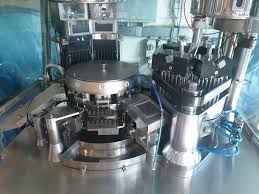
A fully automatic capsule filling machine, unlike its semi-automatic counterpart, relies entirely on automated systems to fill empty capsules. It uses multi-position tamping and indexing motions to perform tasks such as filling, sealing, and even some cleaning processes, with little to no manual intervention. These machines are designed for high-volume production and offer more precise control over the entire filling process.
Advantages of Fully Automatic Capsule Filling Machines
While semi-automatic capsule filling machines offer numerous benefits, fully automatic capsule fillers come with their own set of advantages that make them suitable for large-scale operations.
1. Compliance with Industry Standards
Fully automatic capsule fillers are designed to meet stringent quality control standards, such as CE (Conformité Européene) and cGMP (current Good Manufacturing Practices). These machines are built to ensure that the capsules are filled with the exact amount of material, providing consistent and accurate dosing. The precision of fully automatic systems helps maintain product quality, which is crucial in industries like pharmaceuticals, where regulatory compliance is non-negotiable.
2. High-Speed Production
Fully automatic capsule filling machines can handle much higher production volumes than semi-automatic machines. These systems are designed to operate continuously, with minimal human intervention, which is ideal for large-scale manufacturers. The increased speed and automation reduce labor costs and improve overall efficiency, enabling manufacturers to meet high demand without sacrificing quality.
3. Versatility and Adaptability
Fully automatic capsule filling machines are highly adaptable, capable of filling various types of materials at high speeds. They can handle a wide range of capsule sizes, from small to large, and can accommodate different substances, including powders, granules, and even liquids. Some fully automatic systems are designed to switch seamlessly between different formulations, making them highly versatile.
4. Reduced Human Error
Because fully automatic capsule fillers require minimal human intervention, the potential for human error is significantly reduced. Automated systems are programmed to fill capsules with consistent accuracy, which helps eliminate mistakes such as overfilling or underfilling. This level of precision is especially important when dealing with products that require exact measurements, such as pharmaceuticals.
5. Ease of Operation
Despite their complex functionality, modern fully automatic capsule fillers are equipped with user-friendly interfaces. These machines are typically controlled through touchscreen displays or computer systems, allowing operators to monitor the filling process and make adjustments with ease. The simplicity of operation reduces the likelihood of operational errors, making it easier for businesses to train their workforce.
6. Safety Features and Data Security
Fully automatic capsule fillers come with built-in safety features that help protect operators and ensure smooth operation. For example, many systems include sensors that automatically halt the machine if a problem is detected, preventing damage or injury. Additionally, data security systems are integrated to protect sensitive information and ensure that production data is stored safely, allowing manufacturers to track and manage their operations efficiently.
Dosator Capsule Fillers vs. Tamping Pin Capsule Fillers
When choosing between different types of capsule filling machines, it’s essential to understand the differences between dosator capsule fillers and tamping pin capsule fillers. Both of these machines work on similar principles, but they have distinct features that make them suitable for different applications.
Dosator Capsule Fillers
Dosator capsule filling machines use a unique process where powder is filled into a dosator cavity at the tip of a specialized tool. This powder is then compacted to form a slug, which is later inserted into the capsule. Dosator machines are ideal for precise dosing, especially in applications that require micro-dosing, such as for dry powder inhalers. These machines are capable of filling fine powders with high accuracy.
Tamping Pin Capsule Fillers
Tamping pin capsule filling machines use a tamping pin to compress the filling material into the capsule. The tamping pin creates space for additional powder, ensuring that the capsule is filled to its maximum capacity. These machines are known for their high-speed filling capabilities and are often used in large-scale production environments where speed and efficiency are crucial.
Disadvantages of Fully Automatic Capsule Filling Machines
Despite their many advantages, fully automatic capsule filling machines also have some drawbacks. These include:
- High Initial Cost: Fully automatic machines are expensive to purchase and install. The complexity of the systems, along with the need for specialized parts, can result in a significant upfront investment.
- Maintenance Requirements: Fully automatic capsule fillers require regular maintenance, which can be costly and time-consuming. This includes servicing of electronic components and mechanical parts.
- Limited Flexibility: While fully automatic machines are highly efficient, they may offer less flexibility compared to semi-automatic machines. Adjustments to the filling process may require additional setup time and effort.
- Risk of Production Downtime: Fully automatic systems are more vulnerable to breakdowns, which can halt the entire production line if not addressed quickly.
Support Equipment for Capsule Filling
In addition to the capsule filling machines, various support equipment is necessary for the preparation and post-processing of materials. This equipment includes:
- Granulators and Mixers: Machines such as high-shear granulators and mixers help prepare the materials before they are filled into capsules.
- Drying Systems: These are used to eliminate excess moisture from the capsules.
- Sorting, Polishing, and Packaging Machines: After the filling process, capsules must be sorted, polished, and packaged to ensure that they meet quality standards.
Conclusion
Both semi-automatic and fully automatic capsule filling machines have their respective advantages, making them suitable for different types of manufacturers. Semi-automatic fillers are ideal for smaller operations with limited resources, offering a balance of affordability, versatility, and efficiency. On the other hand, fully automatic machines are best suited for large-scale production environments, where speed, precision, and high-volume output are required. Understanding the benefits, costs, and specific needs of your operation will help you choose the right machine for your business.
When to Choose a Dosator or Tamping Pin Capsule Filling Machine
The decision between a dosator capsule filling machine and a tamping pin capsule filling machine largely depends on the specifics of the capsules you plan to fill. For smaller capsule sizes, especially when dealing with a limited amount of filling material, the dosator capsule filler is the more suitable option.
One common example of when a dosator machine is necessary is when you need to fill capsules that are used in dry powder inhalers. These capsules often contain as little as 200 milligrams or less of the active ingredient or filler material. Regardless of the capsule size, it’s crucial that the machine accurately fills the capsules with the required amount of filling material. The dosator machine is equipped with a nozzle that has a smaller diameter, making it a perfect fit for smaller capsule sizes, ensuring precise dosing even when dealing with small amounts of material.
Choosing the Correct Capsule Size
Capsules come in a variety of sizes, and the appropriate size is typically chosen based on the specific dosage and formulation requirements of the medication. Capsule size determines the amount of active ingredient and excipient that can be contained within. To determine the correct size, one must consider both the weight of the dosage and the formulation’s composition. The size of the capsule impacts how much filling material it can hold.
Capsules are available in sizes ranging from 000 to 5, with 000 being the largest and 5 being the smallest. A typical size chart for capsules includes the following sizes: 000, 00, 0, 1, 2, 3, 4, and 5. The capsule size you choose will largely depend on the required dosage and how much of the active ingredient is needed to be packed into the capsule.
What is Micro-dosing in the Capsule Filling Process?
Micro-dosing refers to the practice of filling capsules with very small quantities of filling material, typically less than 15 milligrams per capsule. This process is distinct from conventional capsule filling, where capsules are filled with hundreds of milligrams of material. Micro-dosing requires highly precise equipment due to the very small doses involved. The dosator capsule filling machine is particularly suited for this purpose, as it allows for high precision in dispensing tiny amounts of powder or liquid into capsules.
The Role of Dosing Disc in Capsule Filling
The dosing disc in a capsule filling machine plays a critical role in determining the size of the capsules used during the filling process. It also influences the type of tooling system (dosator or tamping pin) to be used. Most importantly, the dosing disc directly affects the speed at which the capsules are filled. By determining the volume of the material dispensed into each capsule, it ensures that the filling process is both accurate and efficient.