
|
Getting your Trinity Audio player ready... |
Understanding Fluidized Bed Coating and Its Applications
Fluidized bed coating is a specialized process employed to apply a uniform layer or film onto solid particles. This technique is commonly used in industries like pharmaceuticals, food processing, and chemical manufacturing, due to its effectiveness in producing high-quality coatings that enhance the properties of the base material. The process involves suspending solid particles in a stream of hot air, allowing them to remain in a “fluidized” state, before spraying a coating material onto them. In this article, we will explore the fluidized bed coating process, its benefits, applications, and key parameters that influence its performance.
What is Fluidized Bed Coating?
Fluidized bed coating is a technique used to apply a thin, uniform coating on solid particles, typically using spray methods. The process occurs within a fluidized bed, where particles are suspended in an upward-moving flow of air. The continuous movement of these particles ensures even distribution of the coating material, which forms a protective film around each particle. This method can be applied to a variety of particles such as pellets, granules, or powders.
This coating process is favored because it ensures consistent, uniform coating quality, which can be essential for products such as pharmaceutical tablets, food products, or specialized chemicals. The fluidized bed can handle materials of varying sizes and shapes, making it a versatile tool for various industries.
Can Pellets Be Coated in a Fluid Bed Coating Machine?
Yes, pellets are one of the most common types of materials coated in a fluid bed coating machine. These machines are designed to handle a wide range of particulate materials, including pellets, granules, and powders. In the case of pellets, the fluidized bed ensures that the coating material adheres evenly around each individual pellet, forming a consistent layer. This makes it an ideal choice for applications where precision in coating thickness is crucial.
Advantages of Using Fluidized Bed Coating
There are several benefits to using a fluidized bed processor for coating, which include time and cost savings, enhanced drying capabilities, and ease of maintenance. Below, we outline the key advantages of fluidized bed coating:
- Time and Cost Efficiency
Fluidized bed coating machines are known for their speed and automation, significantly reducing the time required for coating compared to traditional methods. The automated process also minimizes the need for manual intervention, reducing labor costs and human error. Furthermore, fluidized bed machines require less maintenance and have minimal downtime, making them a cost-effective solution for large-scale production.
- Efficient Heat Exchange and Drying
The fluidized bed machine boasts excellent heat exchange capabilities, which allows the system to maintain optimal temperatures for coating. The hot air used in the fluidization process is distributed evenly, ensuring uniform drying and a more efficient application of the coating material.
- Easy Cleaning and Maintenance
Fluidized bed coating machines are designed for ease of cleaning, with components that can be easily accessed and serviced. The design ensures minimal buildup of residues from previous batches, reducing cleaning time and labor costs. Routine maintenance is also straightforward, and spare parts are widely available.
- User-Friendly Operation
Many fluidized bed coating machines are highly automated, which makes them easier to operate. Operators can control the key parameters, such as air flow, coating material spray rate, and temperature, via an intuitive control panel. The simplicity of the machine design allows for smooth operation, even in high-volume production environments.
Applications of Fluidized Bed Coating
Fluidized bed coating has a wide range of applications across different industries. Here are some common examples of its use:
- Pharmaceutical Industry
In the pharmaceutical industry, fluidized bed coating is used to protect active pharmaceutical ingredients (APIs) from external elements such as moisture, light, or air, which can degrade their efficacy. The coating also helps to mask the taste or odor of certain medications, making them more palatable for patients. Additionally, fluidized bed coating can improve the shelf life of pharmaceutical products by providing a barrier that prevents oxidation or contamination.
- Food Processing
Food products often undergo fluidized bed coating to improve texture, flavor, or shelf stability. For example, sugar or chocolate coatings may be applied to snack items, while other coatings can help preserve the freshness of dried fruits or grains. The even application of coatings enhances the overall quality and visual appeal of the food products.
- Chemical Industry
In the chemical industry, fluidized bed coating can be used to modify the surface properties of granules or powders, such as improving flowability, reducing caking, or controlling the release of certain chemicals. This process is especially useful when dealing with sensitive materials that require precise coatings for specific reactions or processes.
The Fluidized Bed Coating Process
The coating process in a fluidized bed involves several steps that ensure the even application of the coating material. Below is an outline of the typical process:
- Preparation of Materials
Before starting the coating process, the raw materials (e.g., pellets, granules) need to be prepared. This preparation involves inspecting and measuring the particles to ensure they meet the desired specifications. The material is then placed in the product tank of the fluidized bed machine, and the coating parameters are set on the control panel, such as the desired temperature, air flow, and spray rate.
- Fluidization of Particles
Once everything is set, the machine is powered on, and hot air is introduced into the chamber. The air flows at high velocity, causing the particles to become suspended in the air. This fluidized state ensures that each particle is in constant motion, allowing for uniform application of the coating.
- Spraying the Coating Material
The coating material is then sprayed onto the fluidized particles using a spray nozzle. The coating material forms a film around each particle as it comes into contact with them. The even distribution of the material is crucial for achieving a uniform coating thickness.
- Solidification of the Coating
Once the coating material has been applied, the hot air continues to circulate through the bed, causing the coating to dry and solidify. This ensures that the coating adheres firmly to the surface of each particle.
- Post-Coating
After the coating has solidified, the spray nozzles are turned off, and the fluidized bed system continues to blow hot air through the coated particles. This step ensures that any remaining moisture is removed, and the coating is fully cured. Once the process is complete, the coated particles can be removed and stored.
Batch vs. Continuous Fluid Bed Coating
There are two main types of fluidized bed coating processes: batch and continuous. Both processes operate on the same principle of fluidization, but they differ in terms of how the materials are processed.
- Batch Coating
Batch fluid bed coating is typically used for small to medium-scale operations. In this process, particles are introduced into the fluid bed system in discrete batches. The coating material is applied to the particles, and once the coating is complete, the batch is removed. Batch coating systems are ideal for products with varying sizes or for applications where flexibility is required.
- Continuous Coating
Continuous fluid bed coating systems are designed for large-scale, high-throughput production. In this process, the particles flow continuously through the bed while being coated, allowing for a more consistent and efficient coating application. Continuous systems are typically used for materials with low moisture content, and they offer higher capacity compared to batch systems.
The Role of Würster Coating in Fluidized Bed Processors
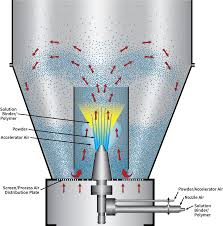
Würster coating is a specialized fluidized bed coating process that uses a unique airflow configuration. In this process, the coating material is sprayed from the bottom of the fluidized bed, creating a cyclical movement of particles. This helps to ensure even coating distribution and is especially effective for coating small particles or those with irregular shapes. Würster coating provides superior coating uniformity and efficiency, making it a preferred choice for many high-quality coating applications.
Key Parameters Affecting Fluidized Bed Coating
The success of the fluidized bed coating process depends on several critical parameters:
- Inlet Temperature: The temperature of the air entering the system must be carefully controlled to ensure proper fluidization and drying. Too high or too low temperatures can affect the quality of the coating.
- Batch Size: The size of the batch being processed influences the choice of spray method and coating consistency. Smaller batches may require different settings than larger ones.
- Airflow: Consistent airflow is essential for achieving satisfactory fluidization and ensuring uniform coating. Variations in airflow can lead to uneven coating or suboptimal fluidization behavior.
- Relative Humidity: The humidity of the surrounding environment can affect the evaporation rate of the coating material. High humidity can slow down drying times, while low humidity can cause excessive drying.
- Spray Rate: The rate at which the coating material is sprayed affects the thickness and uniformity of the coating. This parameter must be optimized based on the specific material being coated.
Choosing the Right Fluid Bed Processor
Selecting the appropriate fluid bed processor is crucial for achieving high-quality coatings. Key factors to consider include:
- Capacity: Choose a processor that matches your production volume.
- Material Properties: Select a machine that can handle the specific characteristics of the raw materials you are using.
- Finished Product Requirements: Consider the quality and uniformity of the finished product when choosing between different spray configurations.
- Process Time and Productivity: The type of machine can impact how quickly and efficiently the coating process is completed.
Material Composition of Fluid Bed Processors
Most fluid bed processors are made from stainless steel due to its durability, resistance to corrosion, and ability to withstand the high pressures and temperatures encountered during the coating process. Stainless steel also ensures that the coating process remains contaminant-free, making it an ideal material for high-precision applications.
The Importance of Quality Standards in Fluid Bed Coating
Compliance with quality standards is essential for ensuring that fluidized bed coating processes produce safe, durable, and effective products. These standards help protect consumers from substandard or counterfeit products and ensure that coatings meet safety, environmental, and performance criteria. By adhering to established quality standards, manufacturers can also enhance product durability and reliability.
In conclusion, fluidized bed coating is a highly efficient and versatile method for applying uniform coatings to solid particles. Whether used in pharmaceuticals, food processing, or chemical manufacturing, this process provides a range of benefits, including cost savings, improved quality, and scalability. By understanding the critical parameters and selecting the right equipment, manufacturers can ensure that their coating processes deliver consistent, high-quality results.